
How To Choose A Notebook 2026 : A Complete Buyer’s Guide
In a time where digital apps dominate productivity and note-taking, I’ve personally noticed something interesting — whenever I truly want clarity, creativity, or deep thinking, I return to pen and paper.
There’s a psychological shift that happens when you write by hand. Your thoughts slow down. Your ideas become intentional. Your creativity expands.
But here’s the truth most people overlook:
Not all notebooks are created equal.
Choosing the wrong notebook can lead to:
- Ink bleeding through pages
- Frustration while writing
- Disorganization
- Reduced motivation to journal or plan
That’s why selecting the right notebook isn’t just a purchase decision — it’s an investment in your productivity and creativity.
Let’s break down exactly how to choose one that truly fits your needs.
1. Size and Portability: How To Choose The Notebook
The size of your notebook directly affects how often you’ll actually use it.
Pocket-Sized (A6 or Smaller)
Best for:
- Quick ideas
- Travel journaling
- Daily task lists
- Minimalists
These fit easily into bags or even jacket pockets. If you’re always on the move, this size works beautifully.
Medium (A5 – Most Popular Choice)
Best for:
- Students
- Professionals
- Bullet journaling
- Everyday planning
Personally, A5 is the sweet spot. It balances portability with enough writing space.
Large (A4 or Bigger)
Best for:
- Artists
- Detailed planners
- Extensive note-taking
- Sketching
These are less portable but perfect for desk use.
Pro Tip
If you plan to carry it daily, weight matters just as much as size. A thick hardbound notebook can feel amazing — but heavy in your bag.
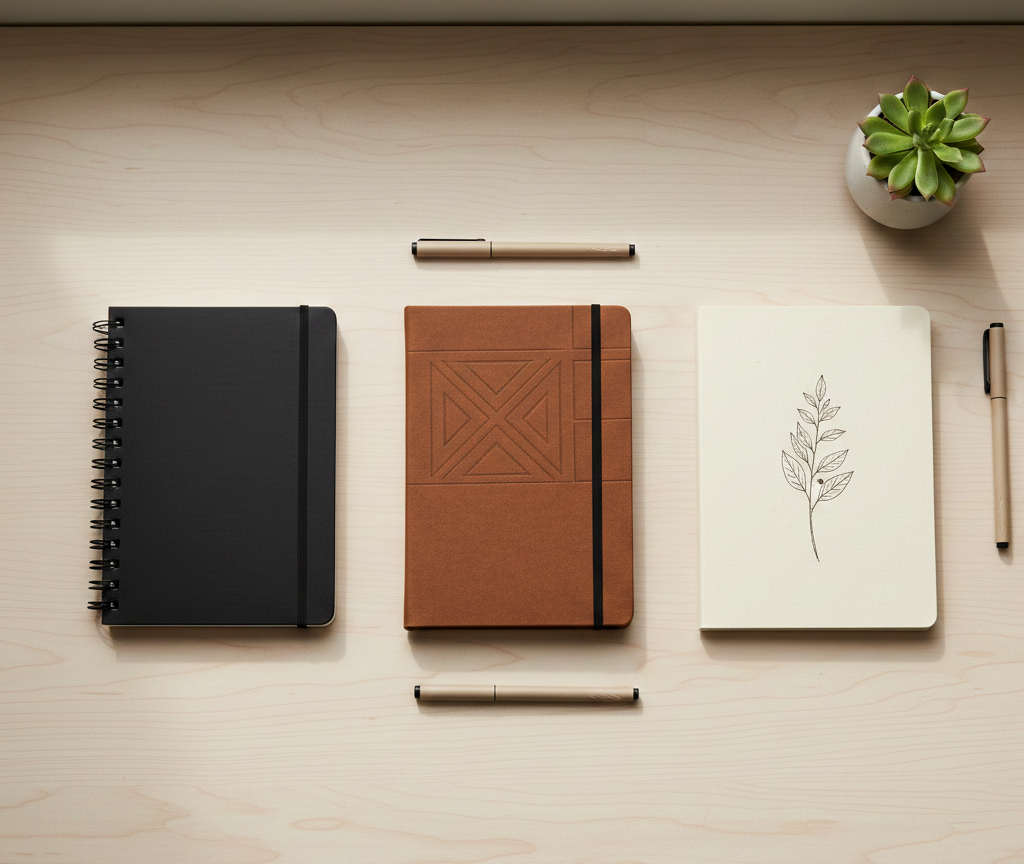
2. Binding Types: Functionality Meets Aesthetics
Binding affects how the notebook feels, opens, and lasts over time.
Spiral Binding
- Lays completely flat
- Easy page flipping
- Great for left-handed writers
- Pages can tear easily
Ideal for students and quick note-takers.
Hardcover Binding
- Durable and premium feel
- Protects pages well
- Long-lasting
- Slightly heavier
Best for journaling, gifting, and professional use.
Paperback / Softcover
- Lightweight
- Flexible
- Travel-friendly
- Less durable
Perfect for everyday carry.
3. Paper Quality and Weight: The Most Overlooked Factor
If you use fountain pens or gel pens, paper quality is critical.
Why Paper GSM Matters
GSM (grams per square meter) determines thickness.
- 70–80 GSM → Standard writing paper
- 90–100 GSM → Minimal bleed-through
- 120+ GSM → Premium thick paper (great for markers & light watercolor)
From experience, anything below 80 GSM with ink pens can be frustrating.
Smooth vs Textured Paper
- Smooth paper → Better for clean handwriting
- Slight texture → Great for sketching
Always consider your primary writing instrument before buying.
4. Ruling and Layouts: Structure vs Freedom
Layout affects both productivity and creativity.
Blank Pages
- Full creative freedom
- Ideal for sketching
- Not ideal for neat writing
Lined Pages
- Structured writing
- Great for journaling & class notes
- Limited for creative layouts
Dot Grid
My personal favorite.
- Subtle guidance
- Great for bullet journaling
- Flexible for both writing & drawing
Grid (Squared)
- Perfect for technical work
- Ideal for design planning
- Useful for math & architecture
5. Budget vs Quality: Finding the Sweet Spot
Notebooks range from affordable basics to luxury leather-bound editions.
How To Choose A Notebook (Here’s what I’ve learned)
- Cheap notebooks often compromise on paper quality.
- Expensive doesn’t always mean better.
- Mid-range options often give the best balance.
Instead of focusing only on price, ask:
- Will this notebook last?
- Does it motivate me to use it?
- Is the paper compatible with my pens?
Sometimes spending slightly more improves your entire writing experience.
6. Personal Style: Because Aesthetics Matter
Let’s be honest — if you love how your notebook looks, you’ll use it more.
How To Choose A Notebook (Options include)
- Minimalist covers
- Leather-bound classics
- Artistic printed designs
- Transparent covers
- Fabric-bound notebooks
Your notebook is an extension of your personality.
7. Specialized Notebooks for Specific Needs
Different purposes require different designs.(How To Choose A Notebook)
Sketchbooks
- Heavy paper (120+ GSM)
- Textured surface
- Larger formats
Travel Journals
- Durable cover
- Compact size
- Pocket sections
Academic Planners
- Structured layouts
- Date sections
- Index pages
Bullet Journals
- Dot grid
- Thick paper
- Minimal pre-printing
8. Compatibility with Accessories and Refills
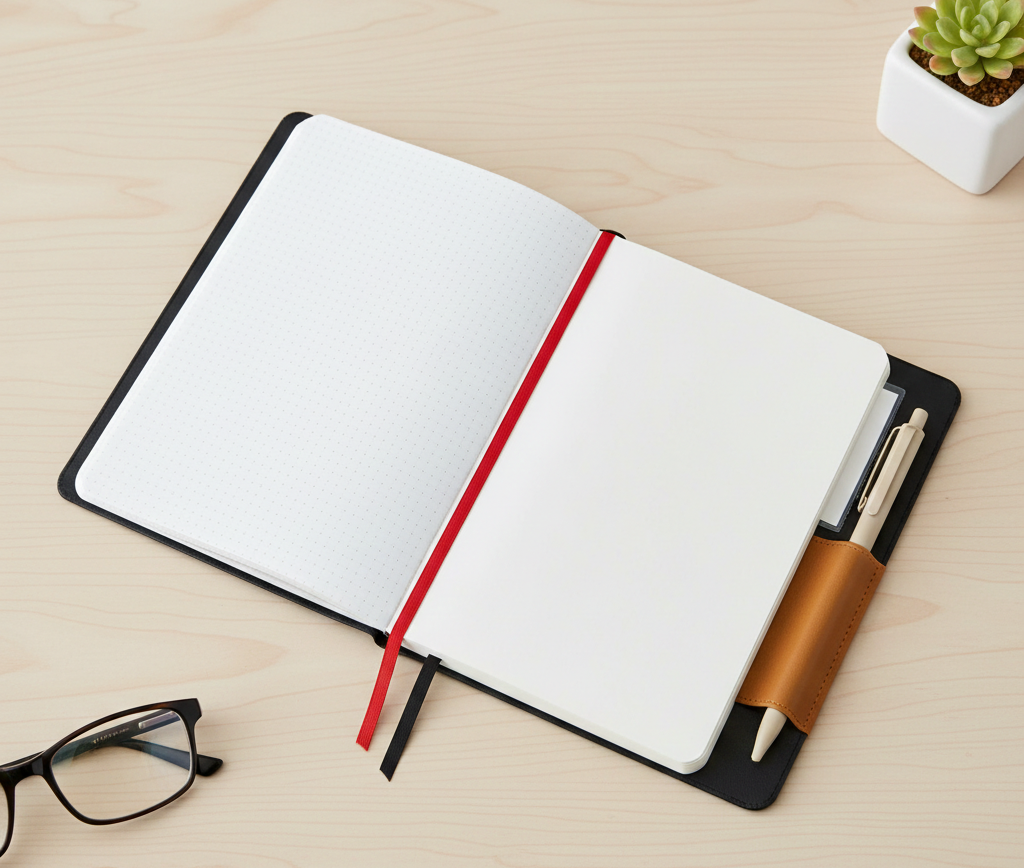
How To Choose A Notebook (Some notebooks support)
- Pen loops
- Elastic closures
- Expandable pockets
- Replaceable refill pages
Refillable notebooks are cost-effective long term and environmentally friendly.
9. Extra Features That Make a Difference
Small features can significantly improve usability:
- Built-in bookmarks
- Elastic closure bands
- Back storage pockets
- Index pages
- Perforated sheets
These features improve organization and convenience.(How To Choose A Notebook)
10. How to Choose Based on Your Personality Type
The Minimalist
Go for:
- A5 size
- Dot grid
- Neutral cover
- 90 GSM paper
The Creative Artist
Go for:
- Large format
- 120 GSM paper
- Blank pages
- Hardcover
The Student
Go for:
- Spiral binding
- Lined pages
- Lightweight
- Affordable
The Professional
Go for:
- Hardcover
- Clean design
- Bookmark ribbon
- Premium paper
Final Thoughts: The Perfect Notebook Is Personal
Choosing the right notebook isn’t about trends.
It’s about:
- How you think
- How you write
- How you create
- How you organize your life
I’ve tested dozens over the years — and what I’ve realized is this:
The best notebook is the one that makes you excited to open it every day.
When your notebook feels right, you write more.
When you write more, you think better.
When you think better, you create better.
And that’s powerful.
Frequently Asked Questions (FAQ)
Q1: What GSM is best for everyday writing?
90–100 GSM works best for most pens without bleed-through.
Q2: Is dot grid better than lined?
Dot grid offers more flexibility, but lined pages are better for structured writing.
Q3: Are expensive notebooks worth it?
If paper quality and durability matter to you — yes. Otherwise, mid-range works great.
Q4: What size notebook is most popular?
A5 size is the most versatile and widely preferred.