
Casing of a Watch (Complete Expert Guide)
The casing of a watch is far more than just an outer shell—it is the heart of durability, design, and protection. After working with watches for years—repairing, restoring, and analyzing different models—I can confidently say that the case determines not only how a watch looks but also how long it lasts.
Many people focus on the dial or brand, but professionals always examine the case first. Why? Because the case protects the internal movement, resists environmental damage, and defines the overall feel of the watch.
In this guide, I’ll walk you through everything you need to know about the casing of a watch, from materials and types to maintenance and expert insights you won’t find in generic articles.
What is the Casing of a Watch?
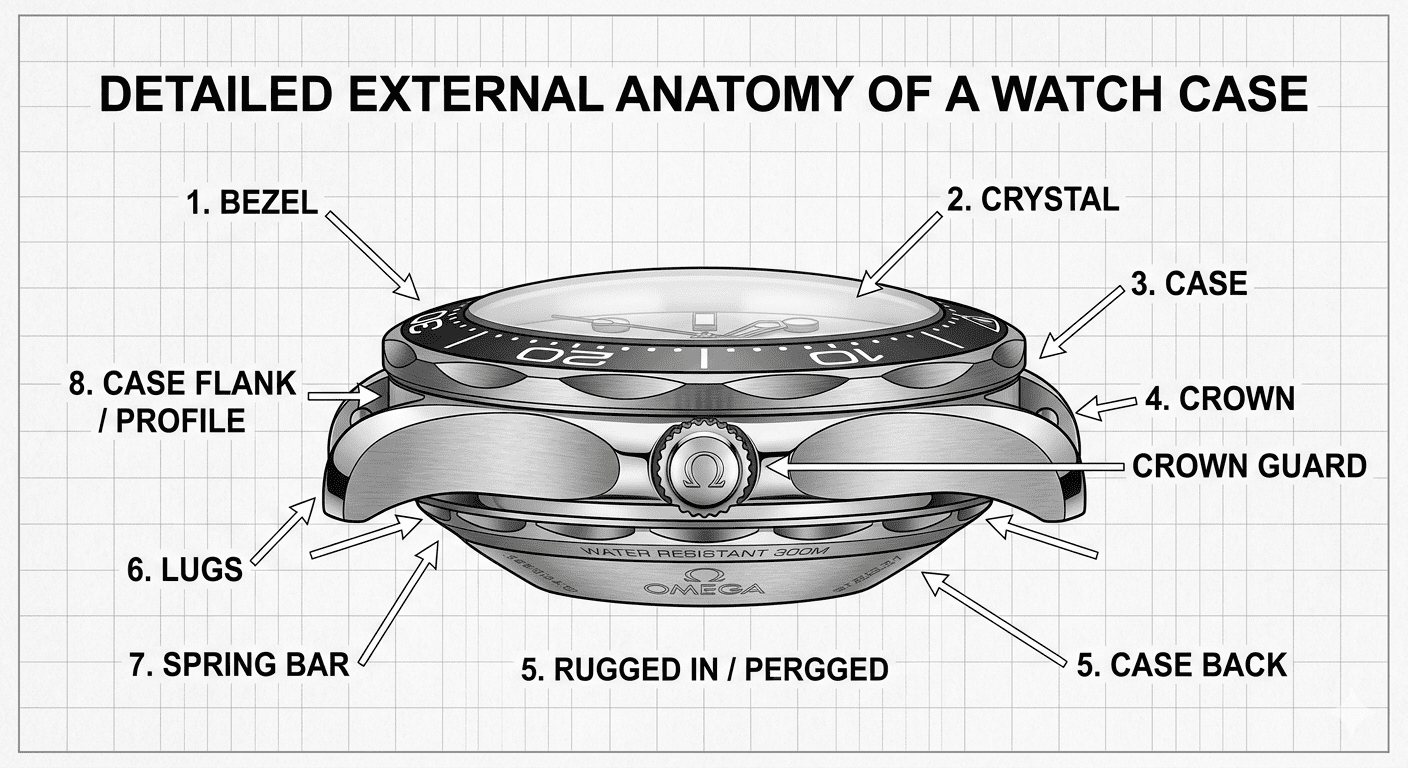
The casing of a watch refers to the outer structure that houses and protects all internal components, including the movement, dial, and hands.
A typical watch case includes:
- Case body
- Bezel
- Case back
- Crystal (glass)
- Crown
👉 Think of it like a protective armor that also adds style and personality.
Why the Watch Case is So Important
From my years of hands-on experience, I’ve seen expensive watches fail simply because of poor casing quality.
Key Functions:
- Protection: Shields internal parts from dust, water, and shocks
- Durability: Determines how long the watch survives daily use
- Aesthetics: Defines the look and feel
- Comfort: Impacts how it sits on your wrist
👉 A good case can extend a watch’s life by years.
Types of Watch Cases
Understanding case types helps you choose the right watch.
1. Round Case
- Most common design
- Classic and versatile
- Easy to read
2. Square Case
- Bold and modern look
- Slightly less comfortable for some users
3. Rectangular Case
- Elegant and vintage style
- Often seen in dress watches
4. Tonneau Case
- Barrel-shaped design
- Unique and stylish
5. Cushion Case
- Rounded square shape
- Popular in luxury watches
Materials Used in Watch Casings
This is where real quality comes in. From experience, material choice directly impacts durability.
1. Stainless Steel
- Most widely used
- Strong and corrosion-resistant
- Affordable and durable
2. Titanium
- Lightweight yet strong
- Hypoallergenic
- Premium feel
3. Ceramic
- Scratch-resistant
- Modern look
- Can be brittle if dropped
4. Gold (Yellow, White, Rose)
- Luxury appearance
- Softer than steel
- Requires careful handling
5. Plastic / Resin
- Lightweight and cheap
- Common in sports watches
6. Carbon Fiber
- Extremely lightweight
- High durability
- Used in premium sports watches
Parts of a Watch Case Explained
Case Body
Main structure holding all components.
Bezel
The ring around the crystal; can be fixed or rotating.
Case Back
The rear cover; can be snap-on or screw-down.
Crown
Used to set time and date.
Crystal
Protective glass (mineral, sapphire, or acrylic).
Water Resistance and Watch Casing
One of the most misunderstood areas.
From real-world repairs, I’ve seen many “water-resistant” watches fail because users misunderstood limits.
Key Points:
- 30m: Splash resistant
- 50m: Light water exposure
- 100m+: Swimming safe
- 200m+: Diving suitable
👉 Case sealing quality plays a major role here.
Also read our latest articles.
How Case Design Affects Comfort
A well-designed case:
- Fits wrist shape
- Has smooth edges
- Balanced weight
👉 Poor design can cause discomfort even in expensive watches.
Common Problems in Watch Casings
Based on years of repair work:
- Scratches and dents
- Loose crown
- Water leakage
- Cracked crystal
- Rust (in low-quality cases)
How to Maintain the Casing of a Watch
1. Regular Cleaning
- Use soft cloth
- Avoid harsh chemicals
2. Avoid Water Exposure
Unless fully waterproof, keep away from water.
3. Store Properly
- Use watch box
- Avoid dust and humidity
4. Service Regularly
Professional servicing every 1–2 years helps.
Expert Tips (From Real Experience)
- Always check case material before buying
- Sapphire crystal is worth the investment
- Avoid cheap coatings—they wear off quickly
- Don’t ignore small cracks—they worsen over time
- Clean after sweating (important but ignored)
How to Choose the Right Watch Case
Ask yourself:
- Daily use or occasional wear?
- Need water resistance?
- Style preference?
- Budget?
👉 For most users, stainless steel is the best balance.
Future Trends in Watch Casings
- Smart materials
- Ultra-light alloys
- Scratch-proof coatings
- Sustainable materials
Conclusion
The casing of a watch is one of the most critical components that determines durability, comfort, and style.
From my years of experience, I can confidently say:
👉 A strong, well-designed case is the foundation of a good watch.
If you understand casing properly, you’ll never make a bad watch purchase again.
FAQ (Frequently Asked Questions)
1. What is the casing of a watch?
It is the outer body that protects internal components.
2. Which material is best for watch casing?
Stainless steel is the most balanced option.
3. Does watch case affect durability?
Yes, it directly impacts lifespan and protection.
4. What is the strongest watch case material?
Titanium and carbon fiber are among the strongest.
5. Can a damaged watch case be repaired?
Yes, minor damage can be fixed; severe damage may need replacement.
6. How do I clean my watch case?
Use a soft cloth and mild cleaning solution.
7. Is water resistance related to casing?
Yes, case sealing determines water resistance.